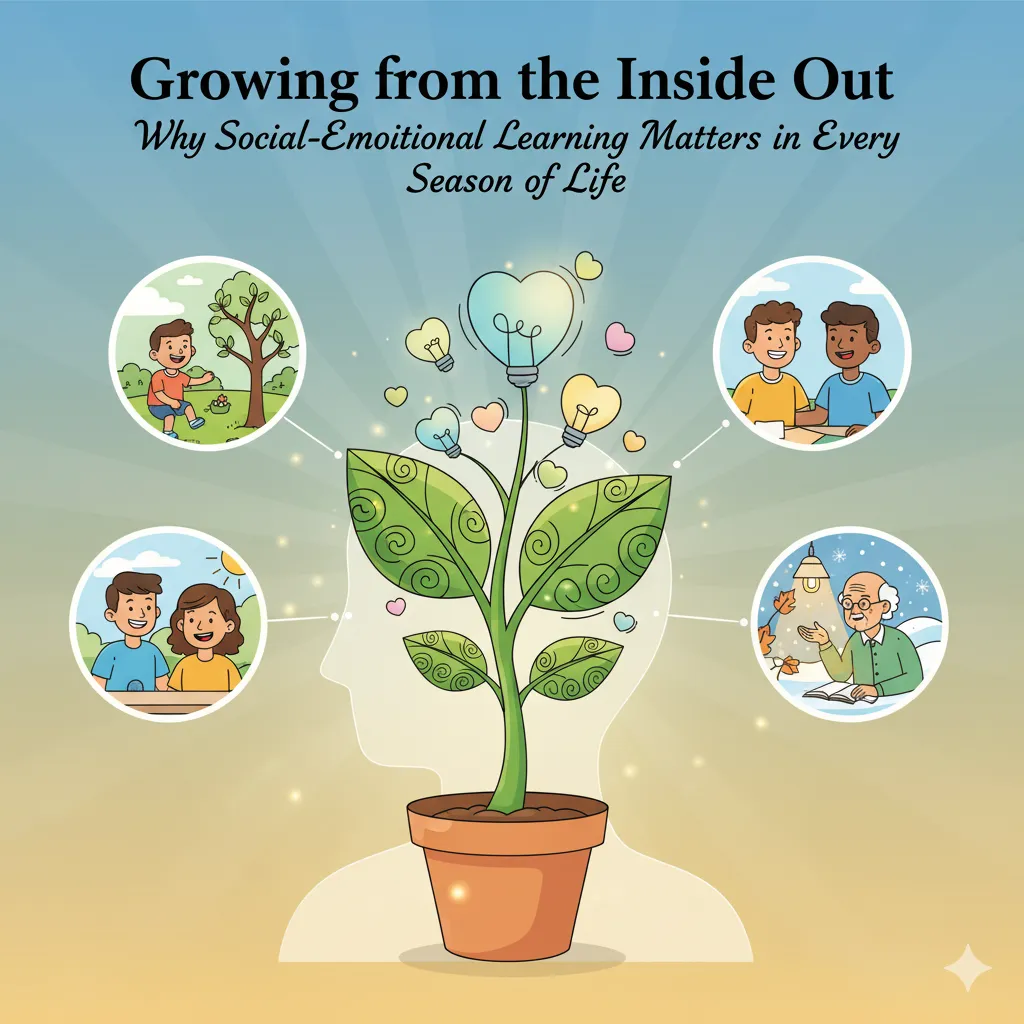
Growing from the Inside Out: Why Social-Emotional Learning Matters in Every Season of Life
Growing from the Inside Out: Why Social-Emotional Learning Matters in Every Season of Life
We often see social-emotional learning (SEL) as something taught in schools — a curriculum added to morning meetings, advisory periods, or character-building programs. However, take a moment to look more closely. You’ll notice that SEL influences everything we do: how we manage stress at work, resolve conflicts at home, communicate with colleagues, parent with patience, and navigate change.
SEL isn’t just for kids.
It’s a lifelong journey — one we revisit whenever life presents us with a challenge, disappointment, transition, or unexpected happiness.
Sometimes, the most meaningful lessons come from quiet, everyday moments. Like watching Bo calm himself after excitement, wait patiently when he wants to run, or seek connection when someone feels upset. His instincts aren’t perfect — but they are rooted in emotional awareness and presence. And aren’t we all trying to improve in that?
SEL Beyond the Classroom
In schools, SEL helps students build trust, regulate emotions, collaborate, and solve problems. But once we graduate, life doesn’t stop requiring us to do those things. In fact, the stakes grow higher:
• Navigating workplace dynamics
• Communicating with partners and family
• Managing stress and burnout
• Leading with empathy
• Setting healthy boundaries
SEL skills empower us to lead, parent, marry, care for others, engage in community involvement, and even cultivate self-awareness through self-talk.
To grow holistically — as learners, leaders, and human beings — we need these skills throughout every season of life.
The CASEL 5: Skills We Never Outgrow
CASEL organizes social-emotional learning into five core competencies. They aren’t boxes to check; they’re muscles we strengthen over time.
1. Self-Awareness
Understanding our emotions, values, strengths, and triggers.
As adults, this might sound like:
Recognizing when you need rest
Naming stress before it explodes
Understanding your motivation
Awareness is the first step toward change.
2. Self-Management
Regulating emotions, managing stress, showing discipline.
Adults practice this when we:
Pause before reacting
Communicate calmly
Follow through on commitments
It’s “adulting” at its finest — in traffic, meetings, and difficult conversations.
3. Social-Awareness
Understanding others’ perspectives, cultures, and experiences.
In our homes and workplaces, this means:
Listening without judgment
Seeking context before assuming
Celebrating differences
It’s empathy in action.
4. Relationship Skills
Building healthy connections — even when things get tough.
This includes:
Conflict resolution
Collaboration
Repairing harm
Setting boundaries
Relationships are not static — they’re cultivated.
5. Responsible Decision-Making
Curiosity, ethics, reflection, and consequences.
Adults experience this when we:
Make financial choices
Navigate workplace dilemmas
Model integrity for children
Every decision plants a seed in our character.
For more information on the CASEL Competencies, please visit www.casel.org.
SEL Is Connected to Our Mental Health
When we actively develop SEL skills, we tend to:
Manage anxiety more effectively
Communicate needs clearly
Build healthier relationships
Bounce back from setbacks faster
These are not “nice to haves.”
They are anchors.
SEL at Home
At home, SEL can sound like:
“Let’s take a break and talk when we’re calm.”
“I see you’re upset — how can I support you?”
“Let’s try that again with kindness.”
Children learn from what we model — not what we assign.
SEL at Work
In the workplace, SEL drives:
Psychological safety
Collaboration
Creative problem-solving
Trust in leadership
And the organizations that prioritize SEL?
They retain talent.
They innovate.
They thrive.
Because where hearts feel safe, minds expand.
SEL and Lifelong Growth
Here’s the secret no one teaches us:
SEL doesn’t have an endpoint.
We grow through:
New seasons
New roles
New relationships
New challenges
Every age brings new emotional edges to smooth.
And that’s okay.
Growth is not linear — it’s layered.
A Gentle Reminder from Bo 🐾
When Bo stumbles, becomes overstimulated, or steals a sock (yes, it happens), he learns through experience and repair:
Pause
Reset
Try again
And every time he approaches a situation with more patience, it reminds me:
We are all works in progress — learning with each step, wag, and wobble.
Final Thought
Social-emotional learning shapes how we show up — at school, at work, and at home. When we strengthen these competencies, we create:
Healthier relationships
Happier teams
Calmer homes
More grounded leadership
The work is never finished.
But every moment is an invitation to grow.
Reflection Prompt
Which of the five CASEL competencies are you actively strengthening right now — and what’s one small step you can take this week to nurture it?